
· by Donna Dosado · 3 min read
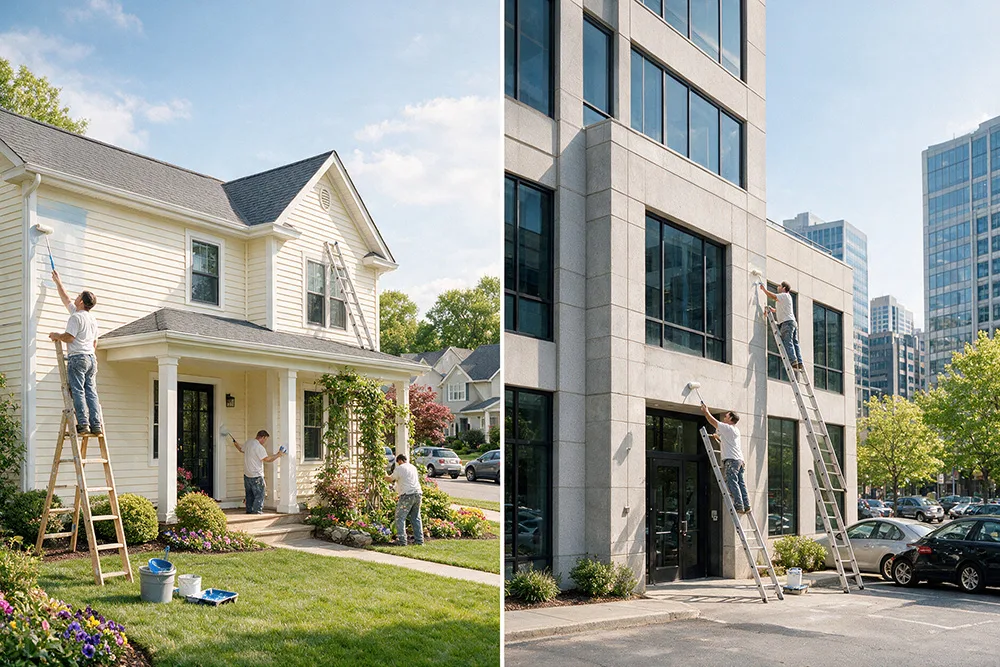
The line between a residential painter and a commercial painting contractor is not always obvious from a quote or a website. Both use paint, both send crews to job sites, and both can produce a finished wall. The difference shows up when the project gets complicated, and commercial projects get complicated consistently. Contact Rusty's Painting at (407) 312-4803 to talk through your commercial project before finalizing a contractor.
What systems does a real commercial painting operation have that a residential painter typically does not?
Quality control documentation is the first one. Commercial painting specifications frequently require ongoing environmental readings, film thickness measurements, and written logs throughout the project. These are not optional paperwork. They are what supports the manufacturer warranty and documents that the coating was applied correctly if a dispute arises later. A commercial painting operation has established processes for this documentation. A residential painter scaling up does not.
Construction management platform fluency is the second. Commercial builders coordinate subcontractors through software systems like ProCore, BuildingConnected, and GCPay. Scheduling, submittals, RFIs, progress billing, and lien waivers all run through these platforms on a commercial job. A contractor who is not already operating in these systems creates friction at every coordination point with the builder, project manager, and other trades on site.
What happens when a residential painter takes on a commercial job with other trades on site?
Coordination problems. Commercial construction involves multiple subcontractors working in the same building simultaneously: electricians, HVAC contractors, plumbers, finish carpenters, and others. The sequence in which these trades work through a building is managed carefully because each one's progress depends on others completing specific areas first. A painting crew that is not experienced in multi-trade coordination disrupts that sequence by being in the wrong place at the wrong time, not knowing when to yield, or creating conflicts with other trades that the General Contractor then has to resolve.
The experience gap shows up in production demands too. A commercial schedule might require 50,000 square feet of ceiling painted in five days. Meeting that demand requires not just a large crew, but the management structure to staff, supervise, and coordinate that crew across a large project without quality degradation. A residential painter can sometimes assemble the equipment to attempt commercial scale work. They cannot always assemble the management structure to execute it correctly.
What about the lowest bid? Is it ever the right call?
The lowest bid in painting contracts is worth scrutinizing before accepting. The most common reason a bid comes in significantly below the others is that it has overlooked portions of the scope or underestimated the manpower and materials the project actually requires. That is not always apparent from the bid document itself, which is why an in-depth conversation about what the proposal covers is more useful than a number comparison.
A contractor who can walk through the full scope, identify the variables, address the conditions that might generate change orders, and demonstrate knowledge of the project environment is showing something a low number cannot: that they understand the job. At Rusty's Painting, that conversation is a standard part of the bidding process because it is also how trust gets established before production starts. Reach out to Rusty's Painting at (407) 312-4803 before your next commercial project goes to bid.