
· by Donna Dosado · 3 min read
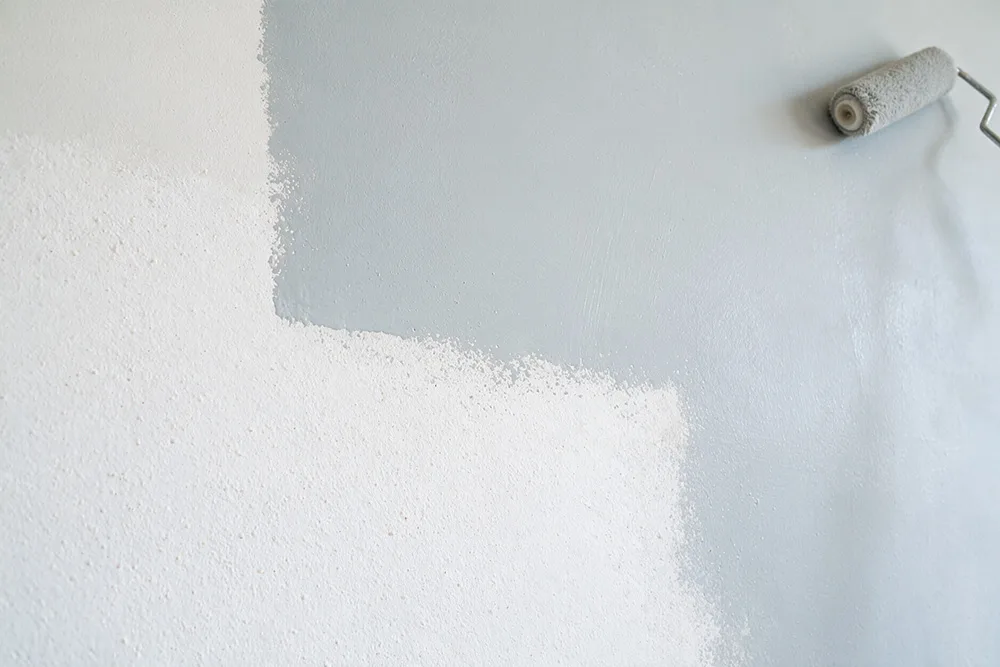
The label sounds efficient. Skip a step, save some time, get the same result. Paint and primer in one has been marketed as a convenience upgrade for homeowners and builders for years. Whether it delivers on that promise depends on understanding what primer actually does and why it matters before the first finish coat goes down. Contact Rusty's Painting at (407) 312-4803 for a straightforward answer on what your project actually needs.
What does primer actually do, and why does it matter?
Primer creates a consistent, stable surface for paint to bond to, what professionals describe as a blank canvas. Different substrates, the materials being painted, require different primer formulations because their surface properties differ significantly. Metal corrodes and needs a primer that prevents rust and creates adhesion. Wood has varying porosity and natural oils that affect bonding. Drywall absorbs moisture differently than either, and its paper face requires a primer specifically formulated for that surface. These are not interchangeable applications.
The primer's job is to address whatever the substrate brings to the situation, whether that is porosity, contamination risk, chemical incompatibility with finish coats, or simple adhesion requirements. A finish coat applied directly over an unprimed or improperly primed surface is relying on a bond it may not get, which leads to peeling, uneven sheen, and early failure.
So what is wrong with a paint and primer in one product?
The product combines ingredients from both categories into a single formula. What it cannot do is deliver the full function of a dedicated primer on a substrate that has specific requirements. A metal surface that needs corrosion inhibition in the primer layer is not getting the same protection from a combined product designed as a general solution. A drywall surface that is heavily patched or has areas of bare substrate needs a primer that can equalize the absorption differences across the wall before the finish coat goes on. A paint-and-primer product applied over that surface will result in what painters call a flashing finish: visible inconsistency in sheen between the patched and unpatched areas even after multiple finish coats. Rusty's Painting always primes before painting because the finish quality depends on it.
What do paint manufacturers actually say about this?
Most manufacturers specify in their warranty documentation that the warranty only applies if the substrate has been properly primed before the finish coat is applied, and that the application occurred within correct environmental conditions. A paint and primer in one product applied to a substrate that requires a dedicated primer does not satisfy that condition. If the finish coat fails, the warranty claim fails with it.
This matters particularly on commercial and industrial projects where the cost of a failed coating goes beyond the paint itself. Substrate damage, rework costs, and schedule disruption from early paint failure are all downstream consequences of skipping proper primer application. The apparent savings from using a combined product, or skipping the primer step entirely, get spent many times over on the repair side.
When is it appropriate to use a combined product?
On low-stakes interior repaints of surfaces that are in good condition, already primed, and not subject to moisture, high-wear, or chemical exposure, a paint and primer in one product can be a reasonable convenience choice. For new construction, substrate changes, exterior surfaces, anything going over metal, or any project where the paint warranty is meaningful, dedicated primer is the correct approach. Contact Rusty's Painting at (407) 312-4803 if you are not sure which category your project falls into. A short conversation about the substrate and the scope usually gives a clear answer.