
· by Hanna Carolina · 5 min read
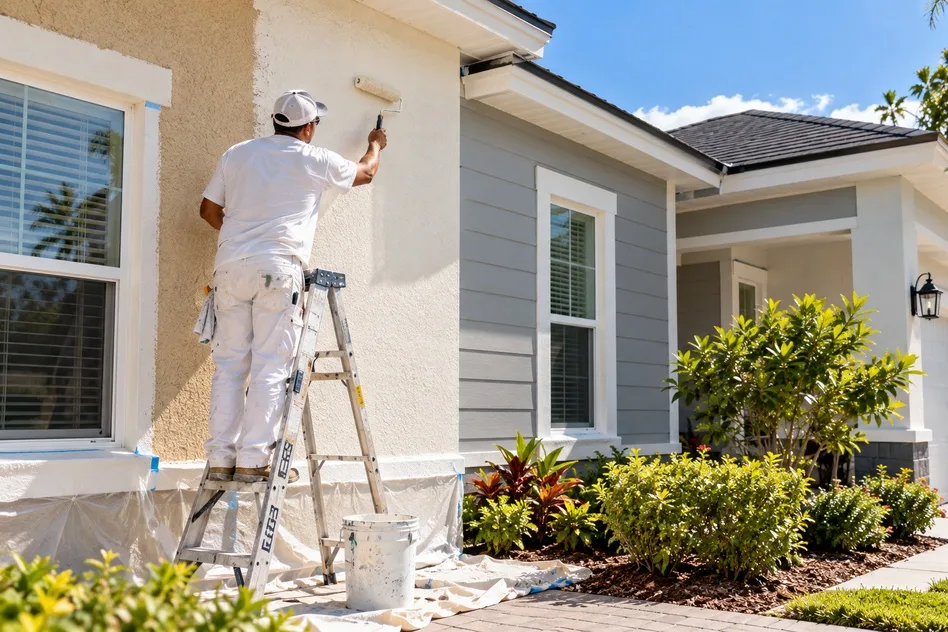
Stucco and Hardie board need different prep and often different coatings. Stucco is porous masonry that cracks and breathes, so it calls for crack repair and a masonry or elastomeric coating. Hardie board is fiber cement siding with seams, laps, and cut ends, so it needs careful caulking, spot priming, and a quality acrylic paint. Treat them the same and one of them will usually fail first.
That is why a one size crew is a risk on Florida homes that mix both materials. At Rusty's Painting, our exterior painting starts with figuring out exactly what each wall is made of. If your house is due for a repaint, get a free exterior estimate by calling (407) 312-4803, and we will walk the house with you.
How should stucco cracks be repaired before exterior painting?
Hairline stucco cracks can be filled and bridged with an elastomeric patch or a high build coating. Wider cracks need to be opened, cleaned, and patched with a stucco repair compound so the new surface matches the texture around it.
Start with a pressure wash. Stucco soaks up dirt and mildew, and homes on shaded, wooded lots near Wekiwa Springs State Park tend to grow green and black mildew on north facing walls. That growth has to be killed and rinsed away, or the new paint will lift right off it. Once the wall is clean and dry, cracks get sorted by size. Hairline cracks are filled with a brushable elastomeric patch. Larger ones are cut back, patched, and textured to blend in before any coating goes on.
Elastomeric coatings are a great option for stucco that keeps cracking. They go on thick, stretch as the wall expands and contracts, and can bridge small cracks that would split ordinary paint. The tradeoff is breathability. If stucco is wet when an elastomeric coat goes on, that moisture can get trapped and cause blistering. Diagonal cracks off window corners or wide, growing cracks may point to settling, and those deserve a closer look before anyone paints over them.
How should Hardie board seams be caulked and primed?
Hardie board seams, butt joints, and trim gaps should be caulked with a flexible, paintable sealant, and any bare fiber cement, especially cut ends, should be primed before painting. The bottom edges where boards overlap should stay open.
That last detail matters more than most homeowners realize. Lap siding is designed so water that gets behind a board can drain out at the bottom. Caulking that lap shut traps moisture against the siding and sheathing. We caulk where trim meets siding, around windows and doors, and at butt joints where two boards meet end to end, not along every horizontal line.
Exposed cut ends are the other weak spot. Fiber cement absorbs water through raw edges, and paint applied over an unprimed end tends to swell and peel first. Newer homes in the subdivisions along the Wekiva Parkway corridor often have Hardie board accents mixed with stucco walls, which means two very different prep routines on one house. Our exterior painting crews handle both on the same job, so nothing gets the wrong treatment.
What paint should you use on stucco vs Hardie board?
Stucco does best with a 100 percent acrylic masonry paint or an elastomeric coating. Hardie board does best with a high quality 100 percent acrylic exterior latex. Heavy elastomeric coatings are generally not recommended on fiber cement siding.
The difference comes down to how each surface moves and breathes. Stucco is rough, porous, and prone to small cracks, so a thick, flexible film helps. Hardie board is smoother and more stable, and a thick elastomeric film can hold moisture against it and peel. Sheen matters too. A flat or low sheen finish hides stucco texture well, while a satin finish suits Hardie board and makes it easier to clean.
Using one product everywhere is the classic mistake. An Apopka homeowner called us when one side of his house began peeling, right before he was hosting an important client dinner at home. When we looked, the peeling wall was Hardie board, and it had been painted with the same product used on the stucco around it. In established neighborhoods like Errol Estate, where homes have been repainted several times over the years, it pays to know what is already on the walls before choosing what goes on next.
How does proper prep prevent peeling in Florida heat?
Proper prep prevents peeling by giving paint a clean, dry, sound surface to grip. In Florida, peeling usually traces back to moisture, mildew, chalky old paint, or coatings applied in the wrong conditions.
Heat and humidity are hard on exterior paint. Afternoon sun can push wall temperatures well above the air temperature, and paint that dries too fast does not bond well. Summer storms soak walls daily. So timing matters as much as product. Walls need to dry after pressure washing before painting. Chalky old paint should be cleaned and primed with a bonding primer. Sun-facing walls are best painted earlier in the day, and painting should stop when rain is coming.
Ready for an exterior that lasts? Call Rusty's Painting at (407) 312-4803, or schedule your free estimate, and we will prep and paint your Apopka home the right way for each surface.