
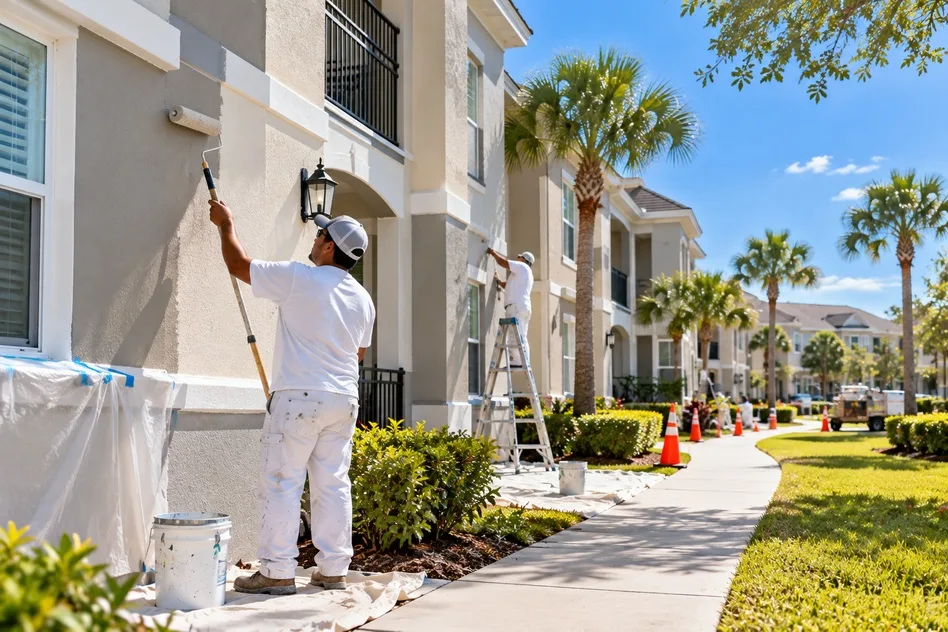
Repainting an HOA community without disrupting residents comes down to planning: working one building at a time, giving residents clear notice before crews arrive, protecting cars and landscaping, and sticking to an approved color schedule so every building matches. When those pieces are in place, most residents barely notice the crew is there until the work is done.
Commercial painting for a community is a different job than painting one house. There are dozens of front doors, a board to answer to, and residents who will call the management office the moment something goes wrong. At Rusty's Painting, we plan multi-building projects around the people who live there. If your board is preparing a community repaint, request a project consultation by calling (407) 312-4803.
How do you keep colors consistent with community standards?
Consistency starts with a documented color schedule that lists every approved color by manufacturer, name, and code for each surface, from body and trim to doors and shutters. Every building gets painted from that one schedule, with no substitutions.
Most HOA documents give the architectural review committee final say on exterior colors, so the board should confirm the scheme in writing before work begins. A sample section on one building, viewed in daylight, lets the board sign off on how the colors actually look on the walls. In large communities like Hunter's Creek, where neighborhoods may each have their own approved palettes, that written schedule keeps one village from drifting away from the next.
Paint management matters too. Using the same product line throughout and mixing larger batches together helps prevent slight color shifts between buildings painted weeks apart. Sheen should be specified as carefully as color, because a satin door next to a flat one looks wrong even when the color matches. Our HOA and multi-family painting services include building that schedule with the board before the first gallon is opened.
How are landscaping and parked cars protected during painting?
Landscaping is covered or tied back away from walls, and vehicles are moved or covered before any spraying or pressure washing begins near them. A careful crew treats residents' property as if it were part of the job, because it is.
Shrubs and foundation plantings sit right against most Florida building walls. They get tied back or covered with breathable drop cloths, never plastic left sitting in the sun, which can cook plants within hours. Pressure washing runoff is directed away from flower beds, and sidewalks and entryways are protected from drips.
Cars are the bigger worry for most boards. Parking lots in communities like Avalon Park often sit right beside the buildings, so overspray control is essential. Residents should be asked in advance to move vehicles away from the building being worked on. Where that is not possible, cars get covered, and crews switch from spraying to brushing and rolling close to parked vehicles. A daily walk of the work area catches drips or splatter before they become a claim.
How should commercial painting be scheduled building by building?
Each building should move through the same steps in order: pressure washing, repairs and prep, then paint, with the crew finishing one building before moving to the next. That keeps the disruption in any one area short and predictable.
The sequence depends on the community's layout. Crews work in clusters to cut down on moving equipment, and they plan around pools, mail areas, trash pickup days, and the busiest parking times. Working hours should follow community rules, which usually means no early morning noise near bedrooms. In condo communities around MetroWest, where buildings sit close together, a well sequenced plan keeps scaffolding and ladders out of the main walkways.
Flexibility is part of good scheduling. When we were repainting an HOA recently, a number of residents worked night shifts at a hospital and slept during the day. To accommodate them, we adjusted our schedule to paint those sections later in the afternoon, without compromising our deadlines. Our commercial painting crews plan for those kinds of adjustments from the start.
What resident notifications and timeline should the board expect?
Residents should get written notice well before work starts in their building, a reminder a day or two ahead, and a clear way to reach someone with questions. The board should get a realistic project timeline that includes room for weather delays.
Good notices tell residents exactly what to do: which days their building is scheduled, when to move cars, whether to take down wreaths or patio items, and when doors will be painted and need to stay open to dry. Door hangers, management emails, and a posted schedule at the mailboxes all help. A single contact person on the contractor's side, who answers calls and reports to the property manager, keeps complaints from bouncing around.
Timelines depend on the number of buildings, how much repair work turns up, and the weather. Orlando's summer storms can wipe out afternoons, so a good schedule builds in rain days rather than promising dates it cannot keep. Regular progress updates help the board answer residents' questions with confidence.
Planning a community repaint? Call Rusty's Painting at (407) 312-4803, or schedule an HOA painting consultation, and we will help your board plan a project residents will appreciate.